Tag: well-being

  • The Power of Living Authentically: Why Being Yourself is the Key to True Confidence

    We live in a world that constantly tells us who we should be. From social media filters to societal expectations, it can feel like there’s a script we’re meant to follow — one that demands we trade our true selves for approval, acceptance, or belonging.

    But here’s the truth: the most powerful thing you can do for your confidence, your peace, and your future is to live authentically.

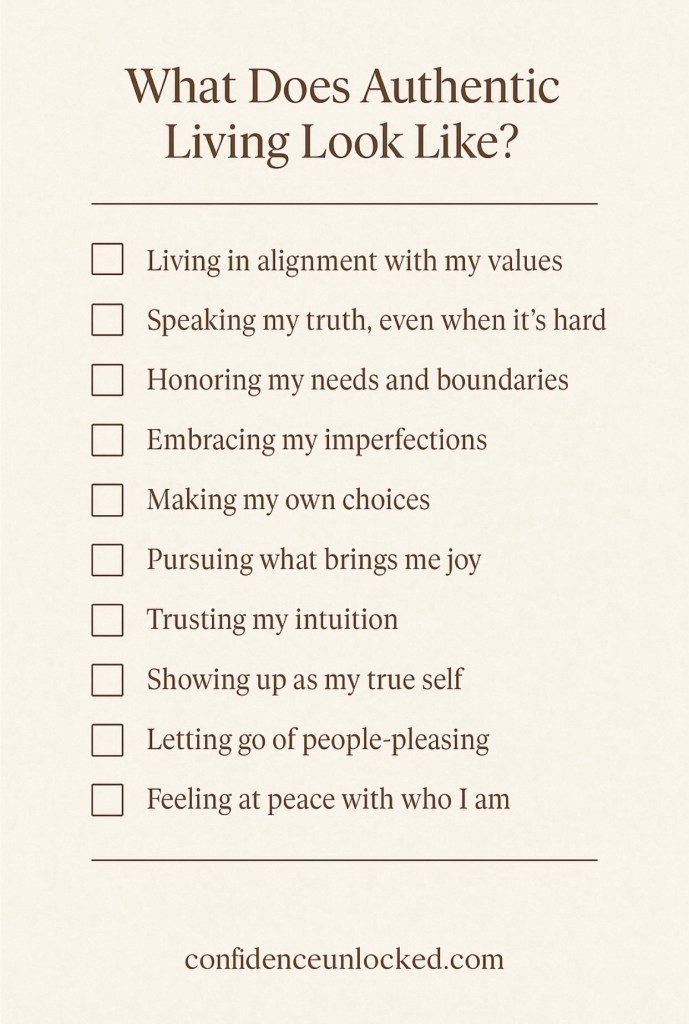
    Authenticity isn’t about being perfect or bold all the time. It’s about being aligned. It’s about letting your values, your choices, and your actions reflect the real you — not the version you think the world wants to see.

    Why Authenticity Matters
    1. It builds unshakable confidence.
    When you’re constantly performing or pretending, you’re standing on shaky ground. But when you live in alignment with who you truly are, confidence becomes natural. You don’t have to force it — you embody it.
    2. It attracts the right people.
    When you show up as your true self, you stop chasing validation. Instead, you naturally attract people who value you for exactly who you are. Real connections can’t grow out of masks or half-truths — they grow out of honesty and presence.
    3. It creates peace of mind.
    Pretending is exhausting. Living authentically frees you from the constant mental tug-of-war of, “What will they think? How should I act?” Instead, you create inner calm, knowing that who you are is enough.
    4. It helps you grow in the right direction.
    Living authentically means making choices based on your values, not fear or comparison. This leads you to opportunities and paths that actually fit your life, not someone else’s version of success.


    How to Start Living Authentically
       •   Notice where you hide. Ask yourself: Where in my life am I shrinking, people-pleasing, or pretending? Awareness is the first step.
       •   Reconnect with your values. What matters most to you — freedom, kindness, growth, love? Use these as your compass.
       •   Practice saying no. Boundaries are an act of authenticity. Each time you choose honesty over pleasing, you strengthen your true voice.
       •   Give yourself permission to evolve. Authenticity doesn’t mean staying the same forever. It means honoring the truth of who you are right now, even as that truth grows and changes.

    Final Thoughts

    Living authentically isn’t always the easiest path. It might mean some people won’t understand you. It might mean you outgrow relationships or environments that once felt safe. But what you gain is far greater: peace, confidence, and the freedom of knowing you are living life on your own terms.

    The most magnetic, beautiful version of you is the one who isn’t trying to be anyone else.

    So ask yourself today: Where am I ready to stop performing and start living as the real me?

    Because the moment you choose authenticity, you choose freedom.

    I spent years trying to be who I thought everyone else wanted me to be — and it left me exhausted, disconnected, and unsure of who I really was. The moment I chose authenticity, everything shifted: my confidence grew, my peace deepened, and my relationships became real. That’s what I help my clients do through my courses and coaching: strip away the noise and rediscover the power of living as your true self.

    Love Lorraine x

    Your first step to a new life

  • The Shame No One Talks About: Living with PTSD After Witnessing a Suicide

    I never thought I’d be the kind of person who had PTSD.

    That always sounded like something other people went through. Soldiers. Abuse survivors. People with headlines in their pain.

    But then I witnessed someone take their own life. And everything changed.

    There was a before — a version of me who felt relatively safe in the world. Who could trust silence, sleep through the night, and not flinch at memories. But that moment split my life in two. What I saw didn’t just leave a scar. It left a story playing on repeat — one I couldn’t turn off.

    The Shame That Followed Me

    No one told me PTSD would come with shame.

    I wasn’t just grieving or hurting — I was ashamed:

    Ashamed of not “bouncing back.” Ashamed of crying all the time. Ashamed of being diagnosed with PTSD. Ashamed that it still affected me months (even years) later.

    There’s this silent expectation that we’re meant to “be strong,” especially when we weren’t the one who died. And yet… I was never the same.

    Shame whispered things like:

    “You should’ve done more.”

    “You’re overreacting.”

    “It wasn’t even your trauma.”

    But here’s the truth I’ve come to hold:

    Witnessing trauma is trauma.

    And surviving it doesn’t make you weak. It makes you human.

    PTSD Is Not a Character Flaw

    Post-traumatic stress isn’t a defect. It’s a very normal response to something utterly abnormal.

    Your nervous system doesn’t care about social expectations.

    It just wants to keep you safe.

    That might look like:

    Startling easily Trouble sleeping Anxiety in “normal” situations Avoiding anything that reminds you of what happened

    That’s not weakness. That’s biology.

    And yet, society still shames invisible wounds. That’s the part we really need to change.

    What I Wish You Knew If You’re Living With It Too

    If you’re reading this and you’ve ever felt ashamed of your PTSD, I want you to know:

    You didn’t choose this. You’re not weak. You don’t have to explain your trauma to deserve compassion. Healing is not linear — and it’s not something you owe anyone.

    Your survival is not something to feel guilty for.

    Your softness is not a failure.

    Your symptoms are not a character flaw.

    You are allowed to be changed. And you are allowed to heal.

    My Healing Affirmation

    If nothing else, I want you to take this with you:

    “What happened hurt me deeply. But healing is not shameful — it’s sacred.”

    Let’s stop apologizing for our trauma.

    Let’s stop hiding our healing.

    Let’s start reclaiming the space it takes to survive.

    You’re still here. That’s a miracle.

    With love and softness,

    Lorraine ❤️

  • The Power of a Rainy Sunday

    by Lorraine | Confidence Unlocked

    Peace

    There’s something quietly magical about a rainy Sunday.

    A kind of sacred stillness that seeps into the bones of the day.

    It slows the world down just enough for us to catch up with ourselves.

    Outside, the sky is heavy with grey, and the raindrops tap a rhythm on the windows like nature’s own lullaby. It’s the kind of weather that gently insists: don’t rush. Don’t run. Stay inside. Wrap yourself in softness.

    And inside, there’s a strange kind of peace.

    Cups of tea you actually finish while they’re still hot.

    Candlelight flickering mid-morning.

    The smell of something baking — even if it’s just toast.

    Old jumpers, thick socks, and a playlist that hits all the right chords.

    Rainy Sundays are a full-body exhale.

    They ask nothing from you except that you be. Not perform, not produce — just exist. And in a world that demands so much, that kind of permission is powerful.

    It’s where clarity has room to land.

    Where grief has space to breathe.

    Where joy — quiet, uncomplicated joy — has a chance to rise up again.

    🌧 Why We Need These Days More Than We Think

    We live in a culture that praises hustle, where doing “nothing” is seen as lazy or indulgent. But here’s the truth most people won’t say out loud: rest is the foundation of resilience. Quiet is where self-trust begins.

    A rainy Sunday isn’t wasted. It’s wisdom.

    It’s restoration.

    It’s coming back to yourself without all the noise.

    You might find answers you weren’t looking for.

    Or peace in the questions that don’t need solving yet.

    You might finally feel safe enough to cry.

    Or inspired enough to dream again.

    There’s healing in hearing the rain and realizing — you don’t have to fix yourself today. You don’t have to prove anything to anyone. You are allowed to take up space without performing.

    🌿 A Ritual for Rainy Sundays

    If you want to make the most of these rare, precious days, try this gentle ritual:

    Start slow. No alarms. No pressure. Let your body lead the pace. Create comfort. Light a candle. Brew your favourite drink. Wear something soft. Make the moment feel held. Journal gently. Ask yourself: – What do I need today? – What am I avoiding? – What am I longing for? Move mindfully. Stretch, walk, or dance around the kitchen. Move like someone who loves themselves. Speak kindly to yourself. Whisper the words you’ve needed to hear: “I’m doing my best. I’m allowed to rest. I am enough even on slow days.”

    💭 Let This Be the Reminder You Needed

    If the rain is falling where you are today, let it fall.

    Let it soften you. Let it slow you.

    Let it water the parts of you that are trying to bloom again.

    Not every day needs to be bright and productive.

    Some days are meant to be gentle. Quiet. Reflective.

    Some days are for healing you didn’t know you needed.

    For laying foundations beneath the surface.

    You don’t need to earn rest.

    You don’t need to chase clarity.

    You don’t need to fight the softness.

    Because even in the rain, you are growing.

    💬 Affirmation:

    🕯️ Journal Prompt:

    What would it look like to honour my energy, even on days when it’s low?

    “I honour the quiet seasons. I trust the slow days. Even here, I am unfolding.”

  • The Ache for Connection: When Emotional Hunger Becomes a Way of Life

    Modern life can be lonely

    We don’t talk about it enough — the craving that lives under the surface. The quiet ache that doesn’t show up with dramatic tears or grand gestures, but instead sits silently in the background, woven into the ordinary moments of our lives.

    It’s not always loneliness. Sometimes it’s emotional hunger — a deep, gnawing desire for real connection, not just company.

    We are surrounded by people and still starving.

    Starving for conversations that go beyond “How are you?”

    Starving for someone to see us and not just the role we play.

    Starving for softness in a world that rewards emotional distance.

    The ache is subtle — but it’s constant. It’s in the way we scroll too long, hoping for a message. It’s in the way we replay old conversations in our heads. It’s in the way we shrink ourselves because connection that demands we dim our light feels better than no connection at all.

    And if you’re someone who has spent most of your life taking care of others… chances are, you’ve learned to silence your own hunger for the sake of everyone else’s.

    But that hunger doesn’t go away.

    It disguises itself in overachievement. In people-pleasing. In clinging to the wrong people because some connection, any connection, feels better than the empty space.

    We were never meant to survive on crumbs.

    The Myth of the “Strong One”

    Even the strong ones need support.

    If you’re reading this, maybe you’re the strong one. The dependable one. The “I’m fine” one.

    You’re the one everyone calls when they need advice.

    But when the ache creeps in for you?

    Silence.

    It’s a strange kind of grief — to show up fully for others while slowly disappearing inside yourself.

    You might even tell yourself, “I shouldn’t need this much.”

    But here’s the truth: you do. And that’s okay.

    Humans are wired for connection. Not just casual interaction — soul-deep recognition. You are allowed to want someone to sit beside you, look you in the eye, and say, “I see you. All of you. And I’m not going anywhere.”

    What Emotional Hunger Looks Like in Real Life

    Feeling exhausted after social situations because none of it felt real Constantly questioning your worth when people pull away or don’t respond Clinging to conversations or compliments as if they’re lifelines Over-sharing or over-giving just to keep people close Fantasizing about the one person who’ll “finally understand you”

    You are not broken for feeling this way.

    You’ve just been emotionally underfed.

    So What Do You Do With the Ache?

    Here’s what no one tells you: the ache doesn’t disappear overnight.

    But it can be held with gentleness — and that’s where healing begins.

    Start here:

    1. Get honest about what you need.

    Not what you think you should need. What your heart is actually craving.

    2. Stop accepting crumbs.

    Whether it’s a half-interested text, a one-sided friendship, or emotionally unavailable conversations — let them go. You are allowed to be hungry for more.

    3. Find softness in solitude.

    It’s not about isolating yourself. It’s about learning that your own company can be nourishing, too. Light the candle. Play your favorite song. Make the moment sacred — even if it’s just you and your cat.

    4. Practice being seen.

    Share your truth in small, brave ways. Say how you’re really doing. Ask for deeper conversations. Speak your needs — and watch what shifts.

    5. Build intentional connection.

    Not everyone will get you — but someone will. Whether it’s one person, a chosen family, an online space, or your own voice on the page — create the connection you’ve been waiting for.

    And if no one’s told you lately…

    You are not too much.

    You are not needy.

    You are not unlovable.

    You are not invisible.

    You are allowed to want to feel deeply connected.

    And you are allowed to feel heartbroken when it’s missing.

    But you are not powerless.

    You can reconnect. With others. With life. And most importantly — with yourself.

    Reconnect

    Start small. Start soft.

    You deserve more than crumbs. You deserve to feel full.

  • What My Cat Taught Me About Love

    By Lorraine | Confidence Unlocked

    Love covered in fur.

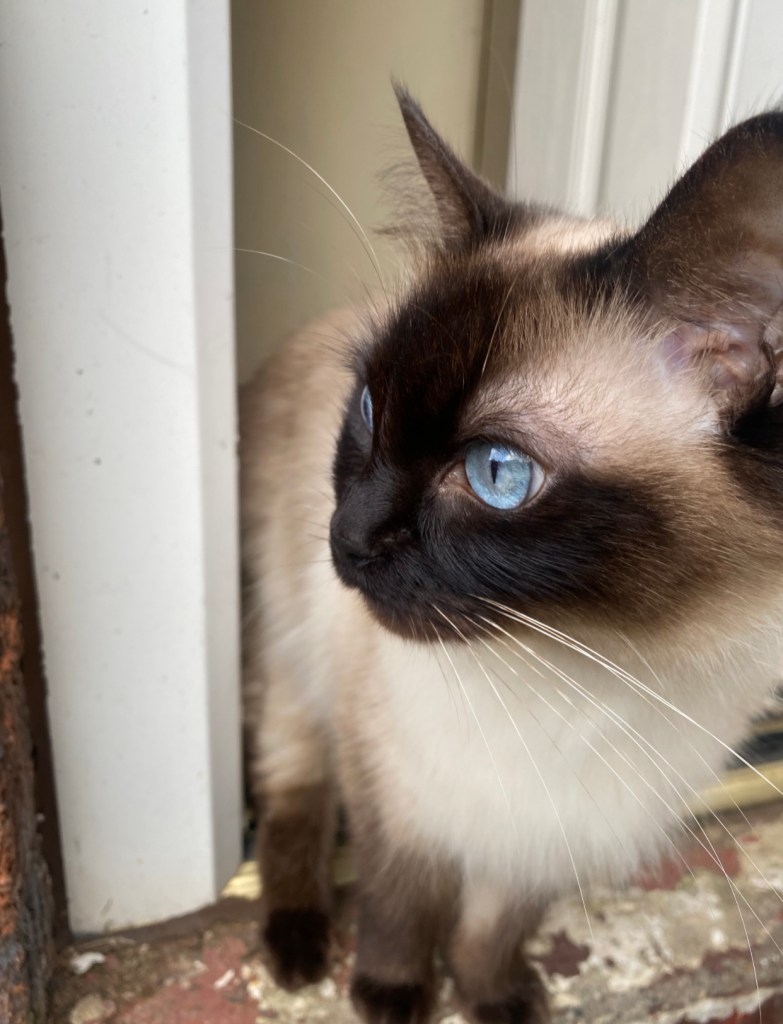
    I didn’t plan to have a cat. She just… happened.

    There was no grand search or adoption mission—just Luna. A small, curious creature who decided I was her human. And that was that.

    She doesn’t ask for much.

    Food. A clean litter tray. A bit of space on the bed. And love, always love.

    Her name is Luna.

    Though around here, it’s also Luna Bunha Tuna, or Looney Tunes, depending on the day and the mood.

    She follows me from room to room, like a quiet little shadow with whiskers.

    She stares at me constantly, like she’s memorising my soul.

    And every single day, she lets me kiss her on the head—even though she has no idea what kisses are.

    🐾 1. Love doesn’t ask for much—just presence.

    Luna doesn’t perform affection. She just is affectionate. She sits beside me when I work, watches me when I cry, curls up near me when I’m tired. No effort. No demands. Just presence.

    💗 2. You don’t have to earn love.

    She never waited for me to prove anything.

    She chose me. Fully. Without hesitation.

    And there’s something healing in that.

    Being seen and loved with no expectations or performance.

    😴 3. Rest is natural, not lazy.

    Cats are professional relaxers. They nap unapologetically in sunny corners and soft blankets.

    Watching Luna taught me that I don’t have to earn rest. I’m allowed to pause, to soften, to do nothing for a while—just because I need it.

    😽 4. Trust is letting someone love you their way.

    She doesn’t know what kisses mean.

    But she lets me do it anyway—every day.

    That’s trust. That’s connection. That’s love. Letting someone care for you in a way that feels foreign but gentle. And receiving it without fear.

    She loves me

    🌙 Final Thought

    I used to think love had to be loud.

    Big gestures. Constant reassurance. Intensity.

    But Luna taught me that love can be soft.

    It can look like eye contact across the room. A warm body beside you in silence. A little paw resting on your leg.

    Or letting someone kiss your head—even when you don’t fully understand why it matters to them.

    Sometimes, love finds you. Quietly. Completely. And your heart finally exhales.

  • Mental Health and Confidence: The Connection No One Talks About Enough

    You can be struggling with your mental health and still be confident

    Written by Lorraine | Confidence Unlocked

    Let’s be real for a second.

    You want to be confident. You want to walk into rooms and not shrink. You want to say “no” without spiraling. You want to show up in your life like you belong there — because you do.

    But when your mental health is wobbling? That kind of confidence can feel galaxies away.

    And it’s not because you’re lazy. It’s not because you’re broken.

    It’s because no one told you that mental health and confidence are tangled together like roots under the surface. You can’t work on one and ignore the other.

    The Real Pain People Don’t See

    Most people see the outside stuff:

    The quietness. The overthinking. The way you always say “I’m fine” even when you’re barely holding it together.

    But what they don’t see is the daily mental battle:

    The fear that you’re too much and not enough. The exhaustion of pretending you’re okay when you’re not. The way your heart sinks when you try again to believe in yourself… and something knocks you back again.

    You want to be confident, but you’re constantly in survival mode.

    And you can’t thrive when you’re just trying to get through the day.

    Why Mental Health Impacts Your Confidence

    When your mind is heavy, it tells you lies like:

    “No one likes you.” “You’ll mess it up anyway, so don’t try.” “You’re not worth taking up space.”

    So what do you do?

    You shrink. You dim your light. You stop showing up.

    Confidence becomes something other people have — people who “have it together.”

    (Not true, by the way. They’re just better at faking it sometimes.)

    Why Low Confidence Makes Mental Health Worse

    Let’s flip it around.

    When you don’t believe in yourself, you second-guess everything:

    You stay in toxic friendships or relationships because you don’t feel like you deserve more. You sabotage opportunities because deep down, you don’t think you’re ready. You people-please until you feel like a shell of yourself.

    Low confidence feeds anxiety and depression. It becomes a loop:

    “I’m struggling → I don’t feel good enough → I isolate → I feel worse.”

    It’s exhausting. And you don’t deserve to live in that loop.

    So… What Now?

    If you’re reading this thinking, “This is literally me,” then first of all—you’re not alone. I get it. I’ve lived it. And I’m still working through it some days.

    Here’s the truth no one says loud enough:

    🧠 You can support your mental health and build confidence at the same time.

    It doesn’t have to be one or the other.

    Both can be true at the same time.

    Start with These 5 Things:

    Talk to Yourself Gently When that cruel inner voice kicks off, pause and ask: “Would I say this to someone I love?” If not—replace it. Rewire it. You are not your thoughts. Stop Performing ‘Fine’ You don’t owe anyone the polished version of you. Being honest about your struggles is a kind of courage that builds real confidence. Build a ‘Proof List’ Every time you do something brave, kind, strong, or difficult—write it down. Call it your confidence receipts. Remind yourself of who you actually are. Do the Tiny Thing Make your bed. Go for the walk. Text someone. The tiniest win when your mind is heavy is a massive act of self-respect. Create a Confidence Ritual Something small you do every day to anchor yourself. Lighting a candle. Saying an affirmation. Playing your power song. It doesn’t matter what it is—just that it feels like you.

    You’re Allowed to Be Both

    You can be healing and still growing.

    You can have hard days and still be building confidence.

    You can have anxiety and still walk into a room and OWN it.

    Confidence isn’t about never falling apart.

    It’s about knowing how to put yourself back together — gently, slowly, in your own time.

    If you’re trying to do that right now?

    I’m proud of you.

    And if you need support, you’re in the right place. Confidence Unlocked is for you.

    🖤 Want more support?

    Download the free Confidence Kit – it’s a soft place to land when the world feels heavy, and a steady hand when you’re ready to rise.

  • When Your Heart Is Genuine, You Will Be Hurt – But Don’t Let It Change Who You Are

    Written by Lorraine at Confidence Unlocked

    Being genuine and open can hurt

    Let’s just tell the truth:

    When your heart is open and your soul is genuine, you will be hurt. There’s no escaping it.

    People will misunderstand you.

    They’ll take advantage of your kindness.

    They might leave without explanation, or disappoint you in ways you never saw coming.

    And sometimes, the ache of it will make you question whether being soft is even worth it.

    But here’s what I want you to hear loud and clear: you are not broken because you feel deeply. You are not weak because you choose to love fully. And you are definitely not wrong for showing up in this world with a wide open heart.

    The Truth About Being Open-Hearted

    You can build walls to protect yourself—but then nothing gets in.

    You can shut down—but then you miss out on real connection, the kind your soul actually craves.

    Or… you can learn to stay soft and strong at the same time.

    You can feel the hurt, honour the lesson, and still keep your integrity. Still keep your empathy. Still keep your you-ness.

    That’s emotional maturity. That’s power.

    How to Stay Soft Without Getting Crushed

    Here’s what’s helped me (and maybe it’ll help you too):

    Set quiet boundaries without hardening your heart. You don’t have to announce them to the world—just honour them consistently. Feel it all. Don’t bypass the pain with positivity. Let it flow, so it doesn’t stick. Remember who you are before the world tried to toughen you up. That version of you? Still worthy. Still valuable. Still enough. Trust that not everyone deserves access to the deepest parts of you—and that’s okay. Your heart is precious, not public property.

    Keep Loving, Anyway

    Some people will never understand how rare it is to love the way you do.

    That’s not your burden to carry.

    You’re here to love fully, live deeply, and lead with light—even if it sometimes costs you.

    Don’t let the hurt make you cold. Don’t let the world convince you that your softness is a flaw. It’s your superpower.

    Stay tender. Stay true. And most of all—stay you.

    Read next: [Why You’ll Never Be Enough—And Why That’s Your Superpower]

  • Why So Many of Us Don’t Know How to Love (Or Be Loved)

    Love can elude us through no fault of our own.

    By Lorraine – Confidence Unlocked

    Pages: 1 2

  • 10 Painful Truths About Heartbreak No One Talks About (And How to Start Healing)

    Heartbreak doesn’t just crack your heart — it shatters your sense of self. Whether you’re going through a breakup or divorce, the emotional weight can feel unbearable. I’ve been there. And I created this for anyone who’s sitting in the ruins wondering if they’ll ever feel whole again.

    Let’s name the pain. Let’s begin to heal.

    1. Loss of Identity

    You weren’t just in love — you were part of something. And when that ends, it can feel like you don’t know who you are anymore.

    2. Crippling Loneliness

    Even when the relationship wasn’t right, the absence feels loud. Especially at night, especially when the silence hits.

    3. Fear of the Future

    “Will I ever find love again?” “Am I too old to start over?” These questions whisper (or scream) in your mind constantly.

    4. Shame and Guilt

    You replay every moment wondering if it was your fault. You question your decisions — even the ones that were necessary for your peace.

    5. Mental Spiraling

    Every fight. Every red flag. Every time you stayed. The overthinking becomes torture. You want peace, but your brain won’t stop.

    6. Emotional Burnout

    You’ve been holding it together with tape and hope. But you’re tired. Even surviving the day feels like a battle.

    7. Losing Routine

    Simple things — coffee, the sofa, your favorite show — feel different now. Everything reminds you of what you had.

    8. Low Self-Worth

    They left. Or maybe you did. But either way, you feel like you weren’t enough. Like you’re somehow broken. Like no one else will choose you.

    9. Quiet Rage

    You’re not just sad. You’re angry. But you don’t know where to put it. Or who will understand.

    10. Fear of Loving Again

    You want love. But the thought of starting over, trusting again, being vulnerable again… it’s terrifying.

    💌 Healing Starts Here

    These feelings are real. But they are not the end of your story.

    I created Healing, Thriving, Loving to hold your hand through this.

    It’s not about “getting over it.”

    It’s about getting through it — gently, honestly, and with the support you deserve.

    👉 Click here to explore the course

    ✨ Bonus: Free Checklist Download

    If you’re wondering whether you’re healing, here’s a quiet nudge to help.